
Plastic pollution control has become a global consensus, and the demand for biodegradable and environmentally friendly tableware continues to rise. Wheat straw, a readily available agricultural byproduct, is being processed into tableware through technological advancements, solving the problem of straw burning while replacing traditional plastics. Breakthroughs in core technologies are becoming the key driving force for the high-quality development of this industry.

Shandong Zhiwo Machinery Equipment Co., Ltd.’s “hot-melt dry-wet compression molding technology” has become an industry benchmark. This technology was recently selected as a typical case of green and low-carbon transformation in China’s light industry and won the second prize of the Shandong Provincial Circular Economy Science and Technology Award. Chairman Wang Jianmin’s team spent 16 years overcoming core challenges such as straw fiber extraction and molding processes, accumulating 41 authorized patents and filling a technological gap in the domestic pulp molding industry. Compared with traditional processes, this technology reduces energy consumption by 40%, and the wheat straw tableware produced can be completely degraded in 45 to 90 days in a natural environment, meeting household composting standards. It also possesses oil and water resistance and high-temperature resistance, far exceeding the performance of ordinary biodegradable tableware.

Technological breakthroughs have fostered a closed-loop industrial chain. Shandong Zhiwo has built an ecological cycle model of “waste straw—fiber extraction—tableware production—waste material fertilization—return to farmland,” creating an 800-kilometer straw collection and storage network, boosting the income of more than 4,000 farmers and creating more than 2,000 jobs. In Zhanhua, Shandong, Linghangzhe Innovation Development Co., Ltd., relying on its proprietary patented technology, produces wheat straw tableware that has passed multiple international certifications in Europe, America, and Japan. Its annual export volume reaches 160 million pieces, with an annual output value of 170 million yuan, turning straw that once polluted the environment through burning into a highly sought-after product for export.
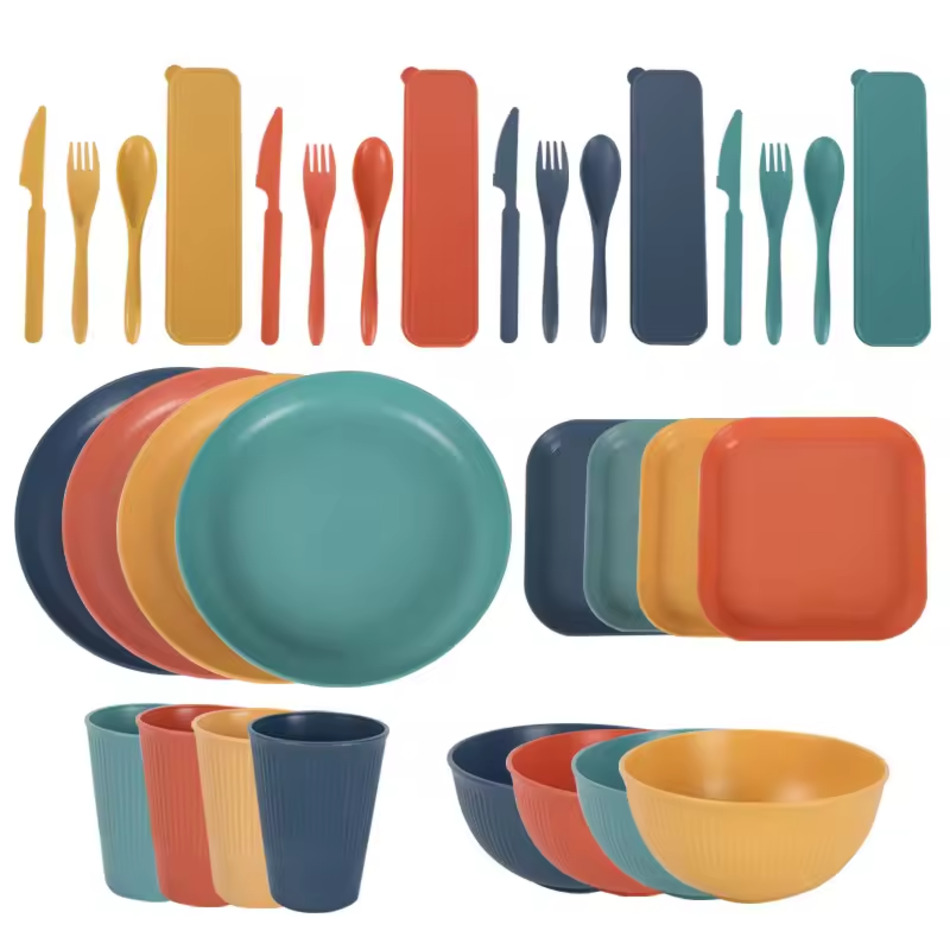
It is worth noting that while the wheat straw tableware industry is undergoing technological advancements, the development of a standard system still needs to keep pace. Problems such as substandard products and irregular labeling are hindering the improvement of the industry’s reputation. Experts point out that only by strengthening the product foundation with technological innovation and simultaneously improving quality standards and regulatory systems can wheat straw tableware continue to expand its market share domestically and internationally, truly maximizing the ecological and industrial value of agricultural waste resources.

Post time: Jan-28-2026


